Nutritive value, mineral composition, phytochemical constituents, and antioxidant properties of freshly collected Justicia secunda Vahl leaves from two locations in Oyo State, Nigeria
Keywords:
Justicia secunda, Phytochemical screening, Mineral composition, Antioxidant activity, Geographical variationAbstract
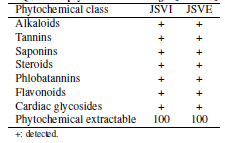
Justicia secunda Vahl is an important medicinal plant in African ethnomedicine, where it is traditionally used in the management of anaemia, sickle cell disease, and inflammatory conditions. Its bioactive potential has been linked to its phytochemical composition. Because the phytochemical, nutritional, and antioxidant profiles of medicinal plants can vary with geographical location and prevailing environmental conditions, this study compared the proximate, mineral, phytochemical, and antioxidant properties of freshly collected J. secunda leaves from Iseyin and Oyo Town, Oyo State, Nigeria, designated JSVI and JSVE, respectively. The samples were authenticated, air-dried, and analysed using standard Association of Official Analytical Chemists (AOAC) methods and validated in vitro assays. Proximate analysis showed similar protein contents in JSVI (18.76 pm 0.04%) and JSVE (18.17 pm 0.04%). JSVE had higher moisture (8.91 pm 0.12%), ash (4.06 pm 0.08%), and crude fibre (19.08 pm 0.54%) contents, whereas JSVI had higher carbohydrate (51.81 pm 0.78%) and gross energy (292.81 kcal/100 g) contents. Both samples had comparable qualitative phytochemical profiles and tested positive for alkaloids, tannins, saponins, steroids, phlobatannins, flavonoids, and cardiac glycosides. Quantitatively, JSVI contained more phenolics (196.97 pm 3.03 mg/100 g), flavonoids (64.89 pm 4.68 mg/100 g), saponins (2.28 pm 0.44 mg/100 g), and cardiac glycosides (46.35 pm 3.34 mg/100 g) than JSVE, whereas JSVE had marginally more tannins. Mineral analysis showed higher potassium, sodium, iron, zinc, manganese, and copper concentrations in JSVI, while JSVE had higher magnesium and phosphorus concentrations; both samples supplied only a small fraction of the cited adult dietary reference values for most minerals. JSVI also showed greater 2,2-diphenyl-1-picrylhydrazyl (DPPH) radical-scavenging activity, ferric-reducing antioxidant power (FRAP), and 2,2^prime-azino-bis(3-ethylbenzothiazoline-6-sulfonic acid) (ABTS) radical-scavenging activity than JSVE, consistent with its higher phenolic and flavonoid contents. These findings indicate that geographical and environmental variation measurably influences the nutritive and phytochemical composition of J. secunda and that the Iseyin sample may possess a comparatively stronger antioxidant profile than the Oyo Town sample. Further in vivo and toxicological studies are recommended to substantiate therapeutic inferences drawn from these in vitro observations.
References
[1] C. O. Eleazu, P. N. Okafor, J. Amajor, E. Awa, A. I. Ikpeama & K. C. Eleazu, ``Chemical composition, antioxidant activity, functional properties and inhibitory action of unripe plantain (Musa paradisiaca) flour'', African Journal of Biotechnology 10 (2011) 16948. https://doi.org/10.5897/AJB10.1180.
[2] C. O. Eleazu, K. C. Eleazu, S. C. Chukwuma, J. Okoronkwo & C. U. Emelike, ``Effect of Livingstone potato (Plectranthus esculenthus N.E.Br) on hyperglycemia, antioxidant activity and lipid metabolism of streptozotocin-induced diabetic rats'', Toxicology Reports 1 (2014) 674. https://doi.org/10.1016/j.toxrep.2014.08.013.
[3] M. R. B. Carneiro, L. O. Sallum, J. L. R. Martins, J. de Castro Peixoto, H. B. Napolitano & L. P. Rosseto, ``Overview of the Justicia genus: insights into its chemical diversity and biological potential'', Molecules 28 (2023) 1190. https://doi.org/10.3390/molecules28031190.
[4] C. R. Onyema, A. C. Ene, R. N. Nwaoguikpe & C. U. Igwe, ``Haematological and biochemical studies on Justicia secunda infusion used in the treatment of anaemia'', GSC Advanced Research and Reviews 20 (2024) 057. https://doi.org/10.30574/gscarr.2024.20.2.0286.
[5] W. M. Kon'e, A. G. Koffi, E. L. Bomisso & F. H. Tra Bi, ``Ethnomedical study and iron content of some medicinal herbs used in traditional medicine in C^{o}te d'Ivoire for the treatment of anaemia'', African Journal of Traditional, Complementary and Alternative Medicines 9 (2012) 81. https://doi.org/10.4314/ajtcam.v9i1.12.
[6] Z. S. Ololade, I. A. Anuoluwa, A. J. Salemcity, O. F. Onifade, F. J. Gbenga-Fabusiwa, O. G. Salemcity & S. P. Balogun, ``Secondary metabolites, antidiabetic, antioxidant, antiarthritic and antimicrobial potential of Justicia secunda for health benefits'', Journal of Clinical Microbiology and Biochemical Technology 10 (2024) 009. https://doi.org/10.17352/jcmbt.000057.
[7] S. O. Onoja, M. I. Ezeja, Y. N. Omeh & B. C. Onwukwe, ``Antioxidant, anti-inflammatory and antinociceptive activities of methanolic extract of Justicia secunda Vahl leaf'', Alexandria Journal of Medicine 53 (2017) 207. https://doi.org/10.1016/j.ajme.2016.06.001.
[8] T. A. Abere, N. N. Monica & A. C. Charles, ``Justicia secunda Vahl (Acanthaceae): antibacterial and antisickling potential'', Tropical Journal of Phytochemistry and Pharmaceutical Sciences 4 (2025) 27. https://doi.org/10.26538/tjpps/v4i1.5.
[9] B. Z. Gbolo, K. N. Ngbolua, E. N. Ciala, I. Semay, P. T. Mpiana, P. Gerbaux & P. Duez, ``LC-MS/MS analysis of crude flavonoid compounds from Justicia secunda from the Democratic Republic of the Congo and evaluation of their antisickling activity'', Natural Resources for Human Health 4 (2024) 387. https://www.researchgate.net/publication/384300954_LC-MSMS_Analysis_of_crude_Flavonoid_Compounds_from_Justicia_secunda_from_Democratic_Republic_of_the_Congo_and_evaluation_of_their_antisickling_Activity.
[10] L. 'Swik{a}tek, E. Sieniawska, K. I. Sinan, G. Zengin, A. Boguszewska, B. Hryc, K. Bene, M. Polz-Dacewicz & S. Dall'Acqua, ``Chemical characterization of different extracts of Justicia secunda Vahl and determination of their antioxidant, antienzymatic, antiviral and cytotoxic properties'', Antioxidants 12 (2023) 509. https://doi.org/10.3390/antiox12020509.
[11] E. O. Aimofumeh, G. N. Anyasor & I. Esiaba, ``Justicia secunda Vahl leaf fraction protects against acetaminophen-induced liver damage in rats by alleviating oxidative stress and enhancing membrane-bound phosphatase activities'', Asian Pacific Journal of Tropical Biomedicine 10 (2020) 479. https://www.researchgate.net/publication/344770717_Justicia_secunda_Vahl_leaf_fraction_protects_against_acetaminophen-induced_liver_damage_in_rats_by_alleviating_oxidative_stress_and_enhancing_membrane-bound_phosphatase_activities
[12] G. Ngwu, C. P. Agbo, M. I. Ngwu, W. I. Ugwuoke, E. U. Okagu, E. C. Onoyima, I. O. Aguzie & P. C. Ozioko, ``Hematinic, antiplasmodial potential and toxicity of aqueous leaf extract of Justicia secunda in albino mice'', Tropical Journal of Pharmaceutical Research 22 (2023) 805. https://doi.org/10.4314/tjpr.v22i4.13.
[13] O. E. Irinmwinuwa, E. C. Ifediba, J. O. Oyindamola & J. Afonne, ``Haemopoietic actions of Justicia secunda leaf extracts in mice'', International Journal of Integrated Health Sciences 10 (2022) 65. https://doi.org/10.15850/ijihs.v10n2.2829.
[14] S. K. Mobisson, C. B. Godson, U. L. Iyanyi, B. E. Ehigiator & A. O. Obembe, ``Hematotoxic ameliorative potential of hydromethanol extract of Justicia secunda and Astymin in 2,4-dinitrophenylhydrazine-induced anaemic male Wistar rats'', Journal of Clinical and Basic Research 8 (2024) 10. https://doi.org/10.61186/jcbr.8.2.10.
[15] A. U. Onochie, A. H. Oli, A. N. Oli, O. C. Ezeigwe, A. C. Nwaka, C. O. Okani, P. C. Okam, C. P. Ihekwereme & J. N. Okoyeh, ``The pharmacobiochemical effects of ethanol extract of Justicia secunda Vahl leaves in Rattus norvegicus'', Journal of Experimental Pharmacology 12 (2020) 423. https://doi.org/10.2147/JEP.S267443.
[16] S. S. B. Bayengue, P. L. T. Yamthe, P. M. Koualiagnigni, C. L. C. Pouaha, T. K. Kowa, L. P. K. Foko, A. L. M. Kognou, P. Toukam, C. E. A. Aboudi Etono, N. R. Ndip, M. Ndomou, D. Shanmugam, G. A. Agbor, R. A. N. Ngame & C. Tchiegang, ``Potential of Justicia secunda Vahl beverage against anaemia and its correlated factors, malaria and infectious diarrhoea'', European Journal of Nutrition & Food Safety 17 (2025) 240. https://doi.org/10.9734/ejnfs/2025/v17i31663.
[17] L. W. Dahanayaka, M. M. S. T. Mapa, C. C. Kadigamuwa & D. Udayanga, ``Impact of geographical variation on nutritional and antioxidant properties of Basella alba L. from Sri Lanka'', BMC Plant Biology 25 (2025) 118.https://doi.org/10.1186/s12870-025-06143-3.
[18] P. Pant, S. Pandey & S. Dall, ``The influence of environmental conditions on secondary metabolites in medicinal plants: a literature review'', Chemistry & Biodiversity 18 (2021) e2100345. https://doi.org/10.1002/cbdv.202100345.
[19] C. K. Ukwueze, O. I. Okogwu, E. C. Ebem, G. N. Nwonumara & J. N. Nwodo, ``Evaluation of the influence of geographical location on phytochemical composition of Moringa oleifera seeds'', World Applied Sciences Journal 37 (2019) 196. Available online: https://www.idosi.org/wasj/wasj37(3)19/5.pdf.
[20] Y. Liu, P. Chen, M. Zhou, T. Wang, S. Fang, X. Shang & X. Fu, ``Geographic variation in the chemical composition and antioxidant properties of phenolic compounds from Cyclocarya paliurus (Batal.) Iljinskaja leaves'', Molecules 23 (2018) 2440. https://doi.org/10.3390/molecules23102440.
[21] R. A. Umoh, I. I. Johnny, O. T. Umoh, A. E. Udoh, V. U. Anah & L. C. Obah-Eni, ``Pharmacognostic evaluation of the leaves and stems of Justicia secunda Vahl (Acanthaceae)'', World Journal of Pharmaceutical Research 9 (2020) 5. https://doi.org/10.20959/wjpr202011-18627.
[22] M. G. Ajuru, A. K. Kpekot, J. Omubo & I. Morrison, ``Comparative study of proximate and phytochemical analysis of the roots of Justicia carnea Lindl. and Justicia secunda Vahl'', Nigerian Annals of Pure and Applied Sciences 4 (2021) 28. https://doi.org/10.46912/napas.217.
[23] E. Osioma & A. Hamilton-Amachree, ``Comparative study on the phytochemical and in vitro antioxidant properties of methanolic leaf extract of Justicia secunda Vahl'', Nigerian Journal of Science and Environment 15 (2017) 111. Available online: https://njse.org.ng/user/approved/82C5053B14.pdf.
[24] AOAC International, Official Methods of Analysis of AOAC International, 18th ed., W. Horwitz (Ed.), AOAC International, Washington, DC, USA, 2016.
[25] S. K. C. Chang, Protein analysis, in Food Analysis, S. S. Nielsen (Ed.), Kluwer Academic/Plenum Publishers, New York, NY, USA, 2010, pp. 133--146. https://doi.org/10.1007/978-1-4419-1478-1_9.
[26] C. V. Ilodibia, E. Akachukwu, M. Chukwuma, N. Igboabuchi, R. Adimonyenmma & O. Nwanneka, ``Proximate, phytochemical and antimicrobial studies of Solanum macrocarpon L.'', Journal of Advances in Biology & Biotechnology 9 (2016) 1. https://doi.org/10.9734/JABB/2016/27922.
[27] C. S. James, Analytical Chemistry of Foods, Blackie Academic & Professional, London, UK, 1995, pp. 256--257. https://doi.org/10.1007/978-1-4615-2165-5.
[28] R. S. Kirk, R. Sawyer & H. Egan, Pearson's Composition and Analysis of Foods, 9th ed., Longman, Harlow, Essex, UK, 1991, pp. 150--153.
[29] G. T. O. Otitoju, ``Effect of dry and wet milling processing techniques on the nutrient composition and organoleptic attributes of fermented yellow maize (Zea mays)'', African Journal of Food Science 3 (2009) 113. http://www.academicjournals.org/ajfs.
[30] M. Lakshmi & B. R. Nair, ``GC-MS analysis of the chloroform extract of bark of Terminalia travancorensis Wight & Arn. (Combretaceae)'', International Journal of Pharmaceutical Sciences and Research 8 (2017) 794. https://ijpsr.com/bft-article/gc-ms-analysis-of-the-chloroform-extract-of-bark-of-terminalia-travancorensis-wight-arn-combretaceae/
[31] C. M. Ejikeme, C. S. Ezeonu & A. N. Eboatu, ``Determination of physical and phytochemical constituents of some tropical timbers indigenous to the Niger Delta area of Nigeria'', European Scientific Journal 10 (2014) 1857. https://www.researchgate.net/publication/277714662_DETERMINATION_OF_PHYSICAL_AND_PHYTOCHEMICAL_CONSTITUENTS_OF_SOME_TROPICAL_TIMBERS_INDIGENOUS_TO_NIGER_DELTA_AREA_OF_NIGERIA
[32] A. Sofowora, Medicinal plants and traditional medicine in Africa, Spectrum Books, Ibadan, Nigeria, 1993 pp. 191-289. https://books.goggle.com.ng/books/about/Medicinal_Plants_and_Traditinal_Medicin. html?id=6gIfAQAAIAAJ&redir_esc=y.
[33] J. B. Harborne, Phytochemical Methods: A Guide to Modern Techniques of Plant Analysis, Chapman & Hall, London, UK, (1973), pp. 107--150.
[34] I. C. Iwu, M. Chijioke-Okere, U. Onu & R. Uchegbu, ``GC-MS, phytochemical and antimicrobial analysis of the leaf of Newbouldia laevis P. Beauv.'', International Journal of Innovative Research and Development 7 (2018) 242. https://doi.org/10.24940/ijird/2018/v7/i7/JUL18053.
[35] M. Gupta, S. Thakur, A. Sharma & S. Gupta, ``Qualitative and quantitative analysis of phytochemicals and pharmacological value of some dye-yielding medicinal plants'', Oriental Journal of Chemistry 29 (2013) 475. http://www.orientjchem.org/?p=22064.
[36] F. Pourmorad, S. J. Hosseinimehr & N. Shahabimajd, ``Antioxidant activity, phenol and flavonoid contents of some selected Iranian medicinal plants'', African Journal of Biotechnology 5 (2006) 1142. https://academicjournals.org/article/article1379770522_Pourmorad%20et%20al.pdf.
[37] K. Ruslan, S. Happyniar & I. Fidrianny, ``Antioxidant potential of two varieties of Sesamum indicum L. collected from Indonesia'', Journal of Taibah University Medical Sciences 13 (2018) 211. https://doi.org/10.1016/j.jtumed.2018.02.004.
[38] I. F. F. Benzie & J. J. Strain, ``The ferric reducing ability of plasma (FRAP) as a measure of `antioxidant power': the FRAP assay'', Analytical Biochemistry 239 (1996) 70. https://doi.org/10.1006/abio.1996.0292.
[39] R. Apak, S. Gorinstein, V. B"ohm & K. M. Schaich, ``Methods of measurement and evaluation of natural antioxidant capacity/activity: IUPAC technical report'', Pure and Applied Chemistry 85 (2013) 957. https://doi.org/10.1351/PAC-REP-12-07-15.
[40] N. M. Mgbemena, O. U. Akoh, G. A. Obodo & K. Nwakwue, ``Determination of the phytochemicals, minerals, proximate and antibacterial constituents of the leaf, stem, root and seed of Ficus capensis (bush fig)'', Journal of the Chemical Society of Nigeria 47 (2022) 179. https://journals.chemsociety.org.ng/index.php/jcsn/article/view/712.
[41] A. B. Aborisade, A. Adetutu & A. O. Owoade, ``Phytochemical and proximate analysis of some medicinal leaves'', Clinical Medicine Research 6 (2017) 209. https://doi.org/10.11648/j.cmr.20170606.16.
[42] O. O. Adewale, E. S. Samuel, M. A. Gbadegesin, S. E. Owumi & O. O. Odunola, ``Ethanol extract of Basella alba Linn. modulates acrylamide-induced oxidative stress in Wistar rats'', Journal of Microbiology, Biotechnology and Food Sciences 11 (2022) e1837. https://doi.org/10.55251/jmbfs.1837.
[43] S. S. Usman, A. A. Hamza, U. S. Abdussalam, A. Muttaka, B. A. Bello & N. A. Bashir, ``Proximate and phytochemical analysis and levels of heavy metals (Pb, Cd, Cr, Ni, and Cu) in some medicinal plants collected from Gombe State, Nigeria'', Specialty Journal of Biological Sciences 4 (2018) 9. https://sciarena.com/article/proximate-and-phytochemical-analysis-and-levels-of-heavy-metal-pb-cd-cr-ni-and-cu-of-some-medicinal-plants-collected-from-gombe-state-nigeria.
[44] N. K. Achi, C. Onyeabo, C. A. Ekeleme-Egedigwe & J. C. Onyeanula, ``Phytochemical, proximate analysis, vitamin and mineral composition of aqueous extract of Ficus capensis leaves in southeastern Nigeria'', Journal of Applied Pharmaceutical Science 7 (2017) 117. https://doi.org/10.7324/JAPS.2017.70319.
[45] T. A. Ojediran, I. A. Emiola, V. Durojaye & J. O. Alagbe, ``Proximate, vitamin and GC-MS profiling of Kigelia africana fruit powder'', Cerrado Agricultural and Biological Research 1 (2017) 13. https://periodicos.cerradopub.com.br/cerrado/article/view/556.
[46] M. D. Olumide, O. A. Ajayi & O. E. Akinboye, ``Comparative study of proximate, mineral and phytochemical analysis of the leaves of Ocimum gratissimum, Vernonia amygdalina, and Moringa oleifera'', Journal of Medicinal Plants 13 (2019) 351. https://doi.org/10.5897/JMPR2019.6775.
[47] A. Sodamade, O. S. Bolaji & O. O. Adeboye, ``Proximate analysis, mineral contents and functional properties of Moringa oleifera leaf protein concentrate'', IOSR Journal of Applied Chemistry 4 (2013) 47. https://www.researchgate.net/publication/284483349_Proximate_analysis_mineral_contents_and_functional_properties_of_Moringa_oleifera_leaf_protein_concentrate
[48] J. O. Alagbe, ``Comparative evaluation of proximate, mineral, vitamin, phytochemical and antioxidant properties of pulp and seeds of doum palm (Hyphaene thebaica) in India'', Bioequivalence & Bioavailability International Journal 8 (2024) 1. https://doi.org/10.23880/beba-16000229.
[49] S. I. Ibironke, J. B. Fashakin & A. O. Badmus, ``Nutritional evaluation of complementary food developed from plant and animal protein sources'', Nutrition & Food Science 42 (2012) 111. https://doi.org/10.1108/00346651211212079.
[50] C. I. Ibeabuchi, K. C. Patrick-Iwuanyanwu, E. N. Oyeike & J. O. Akaninwor, ``Proximate and mineral composition of some medicinal plants'', Journal of Medicinal Plants Research 17 (2023) 45. https://doi.org/10.54117/ijnfs.v2i2.27.
[51] K. A. Sanusi, M. Hamzat, T. A. Yusuff & Q. K. Sanusi, ``Comparative proximate analysis, mineral composition and phytochemical properties of Vernonia amygdalina and Ocimum gratissimum leaves'', Biomedical Journal of Scientific & Technical Research 46 (2022) 37409. https://dx.doi.org/10.26717/BJSTR.2022.46.007348.
[52] S. S. Haruna, O. Ahmed & J. O. Titilayo, ``Nutritional and antinutritional compositions of Lantana camara leaf'', American Journal of Physiology, Biochemistry and Pharmacology 4 (2015) 24. https://doi.org/10.5455/JIB.20150715120224.
[53] S. H. Paul, A. A. Usman, I. N. Gana, A. Manase, O. D. Adeniyi & M. A. Olutoye, ``Comparative study of mineral and nutritional composition of a multifunctional flora composite formulated from seven medicinal plants and their applications to human health'', Engineering and Technology Open Access Journal 1 (2018) 137. https://juniperpublishers.com/etoaj/pdf/ETOAJ.MS.ID.555572.pdf.
[54] A. O. Morakinyo, T. A. Samuel & O. A. Adegoke, ``Mineral composition of commonly consumed local foods in Nigeria'', African Journal of Biomedical Research 19 (2016) 141. https://www.ajol.info/index.php/ajbr/article/view/150270
[55] I. Gbadamosi & A. Oloyede, ``The mineral, proximate and phytochemical components of ten Nigerian medicinal plants used in the management of arthritis'', African Journal of Pharmacy and Pharmacology 8 (2014) 638. https://www.researchgate.net/publication/287344685_The_mineral_proximate_and_phytochemical_components_of_ten_Nigerian_medicinal_plants_used_in_the_management_of_arthritis.
[56] P. M. Emeka, L. I. Badger-Emeka, C. M. Eneh & T. M. Khan, ``Dietary supplementation of chloroquine with Nigella sativa seed and oil extracts in the treatment of malaria induced in mice with Plasmodium berghei'', Pharmacognosy Magazine 10 (2014) 357. https://pmc.ncbi.nlm.nih.gov/articles/PMC4078332/.
[57] I. S. Afolabi, I. O. Osikoya, O. D. Fajimi, P. L. Usoro, D. O. Ogunleye, T. Bisi-Adeniyi & B. T. Adekoya, ``Solenostemon monostachyus, Ipomoea involucrata and Carica papaya seed oil versus glutathione, or Vernonia amygdalina: methanolic extracts of novel plants for the management of sickle cell anaemia'', BMC Complementary and Alternative Medicine 12 (2012) 262. https://doi.org/10.1186/1472-6882-12-262.
[58] A. Islary, J. Sarmah & S. Basumatary, ``Proximate composition, mineral content, phytochemical analysis, and in vitro antioxidant activities of a wild edible fruit (Grewia sapida Roxb. ex DC.) found in Assam, Northeast India'', Journal of Investigational Biochemistry 5 (2016) 21. https://www.researchgate.net/publication/301622285_Proximate_composition_mineral_content_phytochemical_analysis_and_in_vitro_antioxidant_activities_of_a_wild_edible_fruit_Grewia_sapida_Roxb_ex_DC_found_in_Assam_of_North-East_India.
[59] C. O. Eleazu & K. C. Eleazu, ``Nutrient composition, antioxidant capacity and natural products in Livingstone potato (Plectranthus esculentus)'', Journal of Food Processing and Preservation 39 (2015) 3050. https://doi.org/10.1111/jfpp.12570.
[60] M. Madhu, V. Sailaja, T. N. V. S. S. Satyadev & M. V. Satyanarayana, ``Quantitative phytochemical analysis of selected medicinal plant species using various organic solvents'', Journal of Pharmacognosy and Phytochemistry 5 (2016) 25. https://www.phytojournal.com/archives/2016.v5.i2.752/quantitative-phytochemical-analysis-of-selected-medicinal-plant-species-by-using-various-organic-solvents.
Published
How to Cite
Issue
Section
Copyright (c) 2026 Adewumi Idowu Adeagbo, Abiodun Sodamade (Author)

This work is licensed under a Creative Commons Attribution 4.0 International License.