Preparation of baobab shell activated carbon/hematite composite for enhanced adsorption of Congo red dye from aqueous medium

Authors

  • Zuliat O. Opadiran
    Department of Chemistry, University of Ilorin, P.M.B. 1515, Ilorin, Nigeria;
    Department of Chemistry and Industrial Chemistry, Kwara State University, Malete, P.M.B. 1530, Ilorin, Nigeria
  • Mojeed O. Bello
    Department of Chemistry, University of Ilorin, P.M.B. 1515, Ilorin, Nigeria
  • Nasiru Abdus-Salam
    Department of Chemistry, University of Ilorin, P.M.B. 1515, Ilorin, Nigeria

Keywords:

Adsorption, Activated carbon, Baobab, Congo red, Composite

Abstract

Baobab shell activated carbon (BAC), hematite (HEM), and a hematite--baobab shell activated carbon composite (HB) were prepared for the adsorption of Congo red (CR) from an aqueous medium. Physicochemical and spectroscopic investigations were performed on the individual adsorbents and the composite. The effects of concentration, dosage, pH, and contact time on the adsorptive removal process were evaluated. The equilibrium data for BAC and HB fitted the Langmuir isotherm model well, with R2 values of 0.9954 and 0.9292, respectively. HEM was best described by the Freundlich model (R2 = 0.9243), but also showed a good fit to the Langmuir model (R2 = 0.8747). The Langmuir monolayer adsorption capacities of BAC, HEM, and HB, which are close to the experimental values, were 322.58, 158.73, and 172.41 mg/g, respectively. The pseudo-second-order model best described the adsorption kinetics, suggesting a chemisorption process. BAC, HEM, and HB can be effectively employed in the remediation of wastewater containing anionic dyes such as Congo red. Furthermore, the adsorption capacity of hematite can be enhanced by adding baobab shell activated carbon because of the high adsorption efficiency of BAC alone towards the dye.
Dimensions

[1] Z. Li, H. Hanafy, L. Zhang, L. Sellaoui, M. Schadeck Netto, M. L. S. Oliveira, M. K. Seliem, G. L. Dotto, A. Bonilla-Petriciolet & Q. Li, ``Adsorption of Congo red and methylene blue dyes on an ashitaba waste and a walnut shell-based activated carbon from aqueous solutions: Experiments, characterization and physical interpretations'', Chemical Engineering Journal 388 (2020) 124263. https://doi.org/10.1016/j.cej.2020.124263.

[2] G. Ohemeng-Boahen, D. D. Sewu, H. N. Tran & S. H. Woo, ``Enhanced adsorption of Congo red from aqueous solution using chitosan/hematite nanocomposite hydrogel capsule fabricated via anionic surfactant gelation'', Colloids and Surfaces A: Physicochemical and Engineering Aspects 625 (2021) 126911. https://doi.org/10.1016/j.colsurfa.2021.126911.

[3] K. S. Bharathi & S. T. Ramesh, ``Removal of dyes using agricultural waste as low-cost adsorbents: A review'', Applied Water Science 3 (2013) 773. https://doi.org/10.1007/s13201-013-0117-y.

[4] S. Afroze & T. K. Sen, ``A review on heavy metal ions and dye adsorption from water by agricultural solid waste adsorbents'', Water, Air, & Soil Pollution 229 (2018) 225. https://doi.org/10.1007/s11270-018-3869-z.

[5] S. Benkhaya, S. M'rabet & A. El Harfi, ``Classifications, properties, recent synthesis and applications of azo dyes'', Heliyon 6 (2020) e03271. https://doi.org/10.1016/j.heliyon.2020.e03271.

[6] T. K. Roy & N. K. Mondal, ``Biosorption of Congo red from aqueous solution onto burned root of Eichhornia crassipes biomass'', Applied Water Science 7 (2017) 1841. https://doi.org/10.1007/s13201-015-0358-z.

[7] Y. Omidi Khaniabadi, M. J. Mohammadi, M. Shegerd, S. Sadeghi, S. Saeedi & H. Basiri, ``Removal of Congo red dye from aqueous solutions by a low-cost adsorbent: Activated carbon prepared from aloe vera leaves shell'', Environmental Health Engineering and Management Journal 4 (2017) 29. https://doi.org/10.15171/EHEM.2017.05.

[8] F. Parvin, S. Islam, Z. Urmy & S. Ahmed, ``A study on the solutions of environment pollutions and worker's health problems caused by textile manufacturing operations'', Biomedical Journal of Scientific & Technical Research 28 (2020) 21831. https://doi.org/10.26717/BJSTR.2020.28.004692.

[9] W. C. Wanyonyi, J. M. Onyari & P. M. Shiundu, ``Adsorption of Congo red dye from aqueous solutions using roots of Eichhornia crassipes: Kinetic and equilibrium studies'', Energy Procedia 50 (2014) 862. https://doi.org/10.1016/j.egypro.2014.06.105.

[10] N. B. Swan & M. A. A. Zaini, ``Adsorption of malachite green and Congo red dyes from water: Recent progress and future outlook'', Ecological Chemistry and Engineering 26 (2019) 119. https://doi.org/10.1515/eces-2019-0009.

[11] N. Laouedj, A. Elaziouti & A. Bekka, ``Photodegradation study of Congo red in aqueous solution using ZnO/UV-A: Effect of pH and band gap of other semiconductor groups'', Journal of Chemical Engineering & Process Technology 2 (2011) 108. https://doi.org/10.4172/2157-7048.1000108.

[12] J. Gaur, K. Vikrant, K. H. Kim, S. Kumar, M. Pal, R. Badru, S. Masand & J. Momoh, ``Photocatalytic degradation of Congo red dye using zinc oxide nanoparticles prepared using Carica papaya leaf extract'', Material Today Sustainability 22 (2023) 100339. https://doi.org/10.1016/j.mtsust.2023.100339.

[13] K. Wu, X. Pan, J. Zhang, X. Zhang, A. S. Zene & Y. Tian, ``Biosorption of Congo red from aqueous solutions based on self-immobilized mycelial pellets: Kinetics, isotherms, and thermodynamic studies'', ACS Omega 5 (2020) 24601. https://doi.org/10.1021/acsomega.0c03114.

[14] N. A. Qasem, R. H. Mohammed & D. U. Lawal, ``Removal of heavy metal ions from wastewater: A comprehensive and critical review'', npj Clean Water 4 (2021) 1. https://doi.org/10.1038/s41545-021-00127-0.

[15] E. A. Campos, D. V. B. S. Pinto, J. I. S. de Oliveira, E. da C. Mattos & R. de C. L. Dutra, ``Synthesis, characterization and applications of iron oxide nanoparticles---a short review'', Journal of Aerospace Technology and Management 7 (2015) 267. https://doi.org/10.5028/jatm.v7i3.471.

[16] S. M. Ibrahim, M. A. Naghmash & S. A. El-Molla, ``Synthesis and application of nano-hematite on the removal of carcinogenic textile Remazol red dye from aqueous solution'', Desalination and Water Treatment 180 (2020) 370. https://doi.org/10.5004/dwt.2020.25063.

[17] V. A. Grover, J. Hu, K. E. Engates & H. J. Shipley, ``Adsorption and desorption of bivalent metals to hematite nanoparticles'', Environmental Toxicology and Chemistry 31 (2012) 86. https://doi.org/10.1002/etc.712.

[18] K. G. Gareev, ``Diversity of iron oxides: Mechanisms of formation, physical properties and applications'', Magnetochemistry 9 (2023) 119. https://doi.org/10.3390/magnetochemistry9050119.

[19] J. B. Lee, H. J. Kim, J. Luv{z}nik, A. Jelen, D. Paji'c, M. Wencka, Z. Jagliv{c}i'c, A. Meden & J. Dolinv{s}ek, ``Synthesis and magnetic properties of hematite particles in a `nanomedusa' morphology'', Journal of Nanomaterials 2014 (2014) 902968. https://doi.org/10.1155/2014/902968.

[20] R. Ramesh, S. Sohila, C. Muthamizhchelvan, M. Rajalakshmi, S. Ramya & S. Ponnusamy, ``Synthesis and vibrational properties of hematite ($alpha$-Fe$_2$O$_3$) nanoparticles'', Journal of Materials Science: Materials in Electronics 22 (2011) 1357. https://doi.org/10.1007/s10854-011-0313-1.

[21] R. M Cornell, & U. Schwertmann, ``The Iron Oxides: structure, properties, reactions, occurrences and uses, VCH, Weinheim'', (2003), p. 345. http://dx.doi.org/10.1002/3527602097.

[22] H. I. Adegoke, F. A. Adekola, O. S. Fatoki & B. J. Ximba, ``Adsorption of Cr(VI) on synthetic hematite ($alpha$-Fe$_2$O$_3$) nanoparticles of different morphologies'', Korean Journal of Chemical Engineering 31 (2014) 142. https://doi.org/10.1007/s11814-013-0204-7.

[23] I. Herrmann-Geppert, P. Bogdanoff, L. Hepperle & S. Fiechter, ``Hematite ($alpha$-Fe$_2$O$_3$) photoanodes for the photooxidation of water'', ECS Transactions 41 (2012) 201. https://doi.org/10.1149/1.3702427.

[24] R. Khurram, Z. Wang, M. F. Ehsan, S. Peng, M. Shafiq & B. Khan, ``Synthesis and characterization of an $alpha$-Fe$_2$O$_3$/ZnTe heterostructure for photocatalytic degradation of Congo red, methyl orange and methylene blue'', RSC Advances 10 (2020) 44997. https://doi.org/10.1039/D0RA06866G.

[25] N. Abdus-Salam, F. A. Ugbe & A. V. I. Ugbe, ``Optimization and sorption isotherms analysis of anionic dye eosin yellow decontamination by goethite adsorbent'', Acta Scientifica Malaysia 4 (2020) 75. https://doi.org/10.26480/asm.02.2020.75.81.

[26] M. O. Bello, N. Abdus-Salam, F. A. Adekola & U. Pal, ``Isotherm and kinetic studies of adsorption of methylene blue using activated carbon from ackee apple pods'', Chemical Data Collections 31 (2021) 100607. https://doi.org/10.1016/j.cdc.2020.100607.

[27] S. Kaur, S. Rani & R. K. Mahajan, ``Adsorption kinetics for the removal of hazardous dye Congo red by biowaste materials as adsorbents'', Journal of Chemistry 2013 (2013) 628582. https://doi.org/10.1155/2013/628582.

[28] J. N. Wekoye, W. C. Wanyonyi, P. T. Wangila & M. K. Tonui, ``Kinetic and equilibrium studies of Congo red dye adsorption on cabbage waste powder'', Environmental Chemistry and Ecotoxicology 2 (2020) 24. https://doi.org/10.1016/j.enceco.2020.01.004.

[29] J. P. Dhal, B. G. Mishra & G. Hota, ``Ferrous oxalate, maghemite and hematite nanorods as efficient adsorbents for decontamination of Congo red dye from aqueous system'', International Journal of Environmental Science and Technology 12 (2015) 1845. https://doi.org/10.1007/s13762-014-0535-x.

[30] R. Lafi, I. Montasser & A. Hafiane, ``Adsorption of Congo red dye from aqueous solutions by prepared activated carbon with oxygen-containing functional groups and its regeneration'', Adsorption Science & Technology 37 (2019) 160. https://doi.org/10.1177/0263617418819227.

[31] H. I. Adegoke & F. A. Adekola, ``Equilibrium sorption of hexavalent chromium from aqueous solution using synthetic hematite'', Colloid Journal 74 (2012) 1. https://doi.org/10.1134/S1061933X12040035.

[32] Z. Liu, B. Mi, Z. Jiang, B. Fei, Z. Cai & X. Liu, ``Improved bulk density of bamboo pellets as biomass for energy production'', Renewable Energy 86 (2016) 1. https://doi.org/10.1016/j.renene.2015.08.011.

[33] X. Liang, G. Wei, J. Xiong, F. Tan, H. He, C. Qu, H. Yin, J. Zhu, R. Zhu, Z. Qin & J. Zhang, ``Adsorption isotherm, mechanism, and geometry of Pb(II) on magnetites substituted with transition metals'', Chemical Geology 470 (2017) 132. https://doi.org/10.1016/j.chemgeo.2017.09.003.

[34] S. Mopoung, P. Moonsri, W. Palas & S. Khumpai, ``Characterization and properties of activated carbon prepared from tamarind seeds by KOH activation for Fe(III) adsorption from aqueous solution'', The Scientific World Journal 2015 (2015) 415961. https://doi.org/10.1155/2015/415961.

[35] J. Sharmila Justus, S. Dawn Dharma Roy & A. Moses Ezhil Raj, ``Synthesis and characterization of hematite nanopowders'', Materials Research Express 3 (2016) 105037. https://doi.org/10.1088/2053-1591/3/10/105037.

[36] E. Vunain, D. Kenneth & T. Biswick, ``Synthesis and characterization of low-cost activated carbon prepared from Malawian baobab fruit shells by H$_3$PO$_4$ activation for removal of Cu(II) ions: Equilibrium and kinetics studies'', Applied Water Science 7 (2017) 4301. https://doi.org/10.1007/s13201-017-0573-x.

[37] R. Nedjai, N. A. Kabbashi, M. Z. Alam & M. F. R. Al-Khatib, ``Production and characterization of activated carbon from baobab fruit shells by chemical activation using ZnCl$_2$, H$_3$PO$_4$ and KOH'', Journal of Physics: Conference Series 2129 (2021) 012009. https://doi.org/10.1088/1742-6596/2129/1/012009.

[38] M. C. Morris, H. F. McMurdie, E. H. Evans, B. Paretzkin, H. S. Parker, N. C. Panagiotopoulos & C. Hubbard, textit{Standards X-ray Diffraction Powder Patterns, Section 18: Data for 58 Substances}, U.S. Department of Commerce, National Bureau of Standards, Washington, DC, USA, 1981, p.~37. https://doi.org/10.6028/NBS.MONO.25-18.

[39] N. H. Azmi, U. F. M. Ali, F. Muhammad Ridwan, K. M. Isa, N. Z. Zulkurnai & M. K. Aroua, ``Preparation of activated carbon using sea mango (Cerbera odollam) with microwave-assisted technique for the removal of methyl orange from textile wastewater'', Desalination and Water Treatment 57 (2016) 29143. https://doi.org/10.1080/19443994.2016.1168134.

[40] S. Radoor, J. Karayil, J. Parameswaranpillai & S. Siengchin, ``Removal of anionic dye Congo red from aqueous environment using polyvinyl alcohol/sodium alginate/ZSM-5 zeolite membrane'', Scientific Reports 10 (2020) 15452. https://doi.org/10.1038/s41598-020-72398-5.

[41] J. Godwin, J. R. Njimou, N. Abdus-Salam, P. K. Panda, B. C. Tripathy, M. K. Ghosh & S. Basu, ``Nanoscale ZnO-adsorbent carefully designed for the kinetic and thermodynamic studies of Rhodamine B'', Inorganic Chemistry Communications 138 (2022) 109287. https://doi.org/10.1016/j.inoche.2022.109287.

[42] A. L. Cazetta, O. Pezoti, K. C. Bedin, T. L. Silva, A. Paesano Junior, T. Asefa & V. C. Almeida, ``Magnetic activated carbon derived from biomass waste by concurrent synthesis: Efficient adsorbent for toxic dyes'', ACS Sustainable Chemistry & Engineering 4 (2016) 1058. https://doi.org/10.1021/acssuschemeng.5b01141.

[43] L. Cong, L. Feng, X. Wei, J. Jin & K. Wu, ``Study on the adsorption characteristics of Congo red by sycamore bark activated carbon'', Environment. Technology. Resources. Proceedings of the International Scientific and Practical Conference 1 (2017) 64. https://doi.org/10.17770/etr2017vol1.2600.

[44] H. Su, X. Wang, Y. Sun, D. Xu, L. Li, C. Liu, S. Zeng & D. Sun, ``Enhancing the adsorption capacity of hematite by manganese doping: Facile synthesis and its application in the removal of Congo red'', Bulletin of the Korean Chemical Society 38 (2017) 1155. https://doi.org/10.1002/bkcs.11239.

[45] A. Somayajula, A. A. Aziz, P. Saravanan & M. Matheswaran, ``Adsorption of mercury(II) ion from aqueous solution using low-cost activated carbon prepared from mango kernel'', Asia-Pacific Journal of Chemical Engineering 8 (2013) 1. https://doi.org/10.1002/apj.1613.

[46] M. Foroughi-Dahr, H. Abolghasemi, M. Esmaili, A. Shojamoradi & H. Fatoorehchi, ``Adsorption characteristics of Congo red from aqueous solution onto tea waste'', Chemical Engineering Communications 202 (2015) 181. https://doi.org/10.1080/00986445.2013.836633.

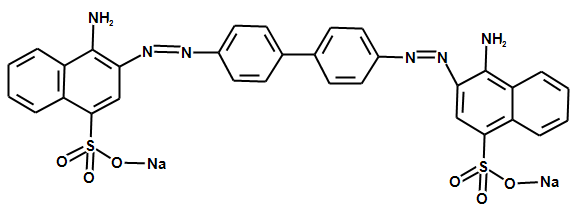
FIG1

Published

2026-09-22

How to Cite

Preparation of baobab shell activated carbon/hematite composite for enhanced adsorption of Congo red dye from aqueous medium. (2026). Recent Advances in Natural Sciences, 4(2), 356. https://doi.org/10.61298/rans.2026.4.2.356

How to Cite

Preparation of baobab shell activated carbon/hematite composite for enhanced adsorption of Congo red dye from aqueous medium. (2026). Recent Advances in Natural Sciences, 4(2), 356. https://doi.org/10.61298/rans.2026.4.2.356